Why Your Portfolio Needs Case Studies, Not Just Images
Publicado
12 de agosto de 2026
3 min de lectura
A beautiful project image can show the quality of your work. A case study shows a client how you think, what you contributed, and why that work mattered.
International companies reviewing a portfolio are looking for more than aesthetics. They want evidence that you can solve the kind of problems they have.
A case study provides that context. A gallery of images alone cannot.
What a strong case study includes
A useful case study answers five questions:
- Who was the client, and what industry are they in?
- What was the challenge?
- What was your specific role?
- What did you create, and why?
- What changed as a result?
That last point does not always have to be a hard business metric. It could be increased engagement, a clearer brand system, faster production, a successful launch, entry into a new market, or simply what the new work enabled the client to do.
The important thing is connecting the creative work to its purpose.
Most portfolios skip straight to the final images. That shows a client what you made. It gives them very little information about the problem you were solving, the decisions you made, or the value you brought to the project.
Why aesthetics alone stop being enough
Visual quality matters. It is often the first thing a potential client notices.
Once a portfolio reaches a strong level of execution, however, beautiful work alone becomes less differentiating. Clients also want to understand the thinking behind it.
Why did you choose that direction? What constraints were you working with? What was your responsibility within the team? How did the final solution respond to the original challenge?
This becomes especially important for senior creatives. Clients hiring for real projects are trying to reduce uncertainty. Showing how you approached a previous challenge gives them evidence of how you might approach theirs.
How to build a case study if you have never written one
Start with a project you have already completed.
Before writing about colors, typography, layouts, or deliverables, describe the client's actual problem in one or two sentences.
Then explain your role. If the project involved a team, be specific about what you were responsible for.
Next, describe the key decisions you made and why you made them. You do not need to document every step of the process. Focus on the decisions that shaped the outcome.
Finally, explain what happened after the work was delivered. Use measurable results when you have them. When you do not, describe what the project helped the client achieve.
Three well-documented projects can tell a potential client far more than fifteen projects presented without context.
How this connects to the other four criteria
Case studies work together with specialization, execution capacity, communication clarity, and reliability, the other four criteria global companies use to evaluate creative talent.
A strong case study can demonstrate several of these at once. It shows the quality of your execution, makes your expertise visible, clarifies your contribution, and gives potential clients a better understanding of how you work.
Read the full breakdown in Los 5 criterios que usan empresas globales para elegir creativos.
At Findie, we look beyond individual images when reviewing creative profiles. We consider the quality and consistency of the work, the creative's experience and specialization, their role in each project, and how clearly their portfolio communicates what they can bring to a client.
If you want your work reviewed for Findie's curated creative network, submit your profile at findie.global.
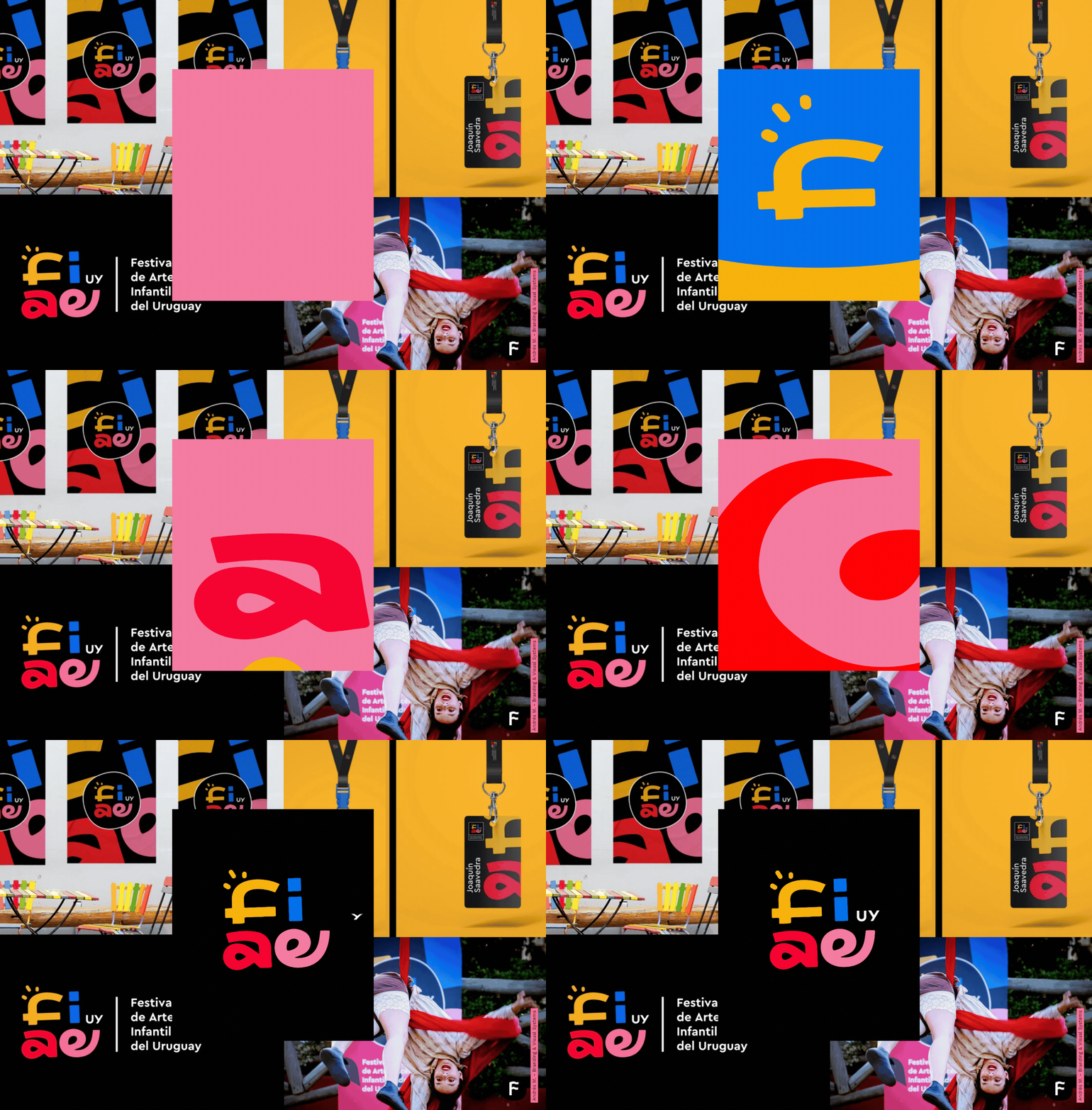
Featured project: Branding for the Festival Internacional de Artes Escénicas Infantil y Adolescente del Uruguay (FIAEuy) by Andrés Mora, specialized in Visual Design & Motion Graphics and one of Findie’s Ambassadors.